Actualités


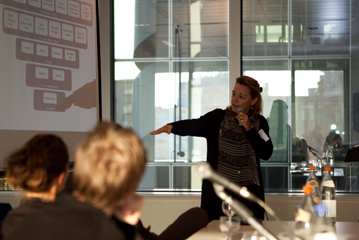
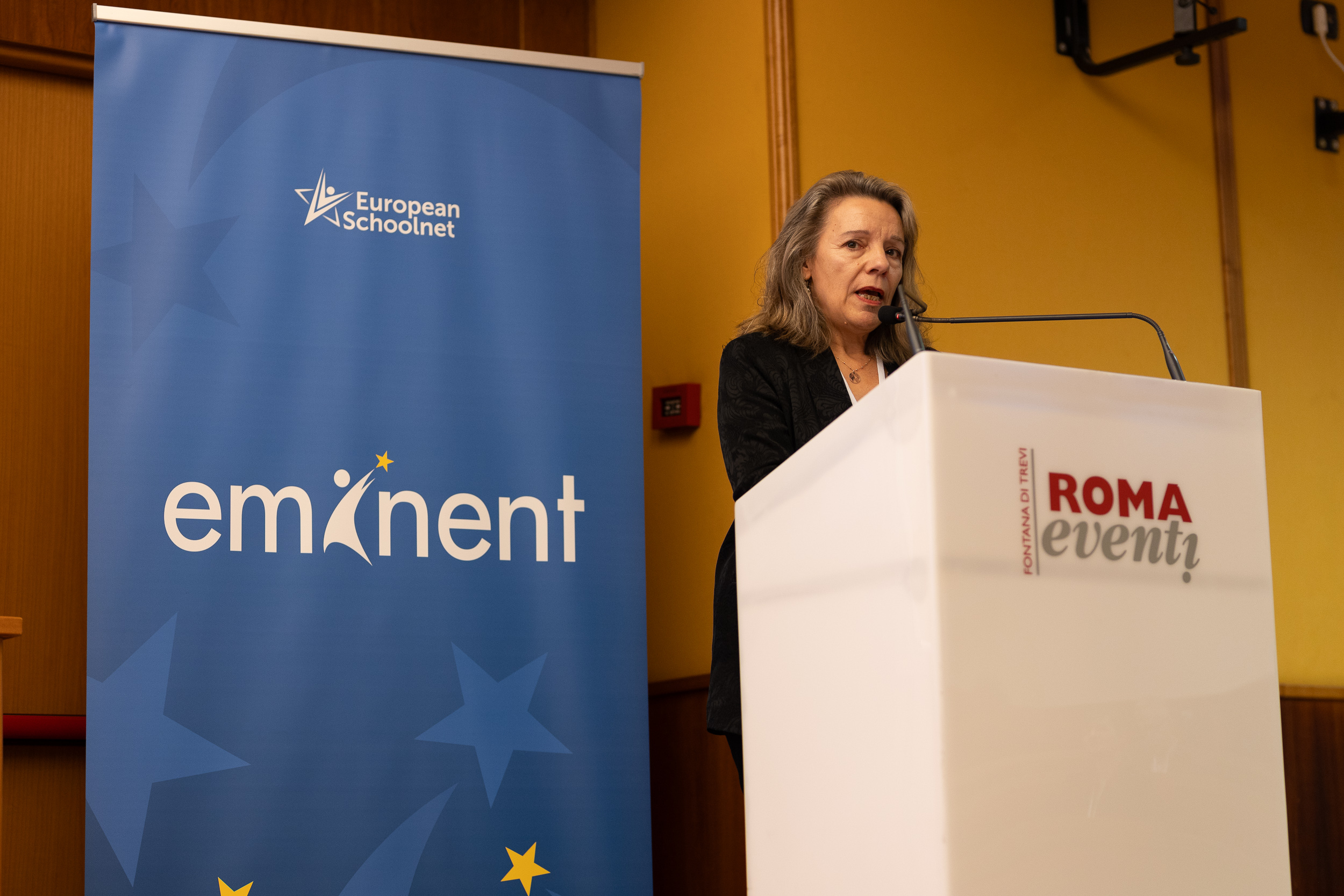
Divina Frau-Meigs a participé aux journées de l’innovation, organisées par le ministère de l’éducation à l’UNESCOO, le 28 mars 2013. Son intervention a porté sur le savoir-devenir à l’ère du développement numérique durable, en articulant usages et apprentissages pour une maîtrise des cultures de l’information.


A l'occasion de l?événement international célébrant les dix ans du Sommet Mondial sur la Société de l?Information, SMSI+10/WSIS+10, l?UNESCO a mis en ligne le rapport ?Exploring the Evolving Mediascape: towards updating strategies, to face challenges and seize opportunities?. Il a été commandité à Divina Frau-Meigs, directrice du master AIGEME, responsable du groupe de recherche CREW (EA 4399) et porteur de l?ANR ?TRANSLIT? à la Sorbonne nouvelle.

Ce rapport est soumis à commentaires et recommandations jusqu?au 3 février, la version finale visant à incorporer les suggestions les plus pertinentes. Il est accessible à
cette adresse.

Dans le cadre du SMSI+10/WSIS+10, Divina Frau-Meigs propose aussi un panel de chercheurs de haut niveau sur le thème ?Contested Governance? (la gouvernance en conteste) dont l?abstract est accessible ici


Divina Frau-Meigs participe au IIIe Symposium International sur le Multilinguisme dans le Cyberespace qui aura lieu à Paris du 21 au 23 novembre.

Pour s?inscrire:
http://www.maayajo.org/spip.php?article151

Plus d'info :
Téléchargez le pdf


"Para las corporaciones de Internet la privacidad no existe, es un derecho obsoleto" :
http://www.revistaenie.clarin.com/ideas/mica-frau-meigs-internet-eg8_0_494950787.html


Divina Frau-Meigs, dans le Nouvel Observateur, à propos de Facebook:

http://obsession.nouvelobs.com/facebook/20120517.OBS5776/facebook-quel-avenir-l-intimite-avec-un-milliard-d-amis.html


Divina Frau-Meigs a participé au débat ?imaginer son avenir en français... S?ouvrir de nouveaux horizons?, organisé par l?OIF à Bruxelles dans le cadre de la journée de la Francophonie, le 19 mars 2012. Elle était en dialogue avec Michaelle Jean (gouverneure du Canada), Adama Samassekou (Président de MAAYA), Anne-Rachel Inné (Responsable Afrique pour ICANN) et Olivier Kayomo (OrthogrAfrique). Elle a présenté sa vision de la ?francophonie 2.0?, en considérant les défis et les atouts du numérique. Elle a mis l?accent sur la culture numérique dans la perspective des droits de l?homme et sur la formation, notamment à l?ingénierie de l?éducation aux médias et à l?ingénierie des industries créatives.

Pierre Kroll, caricaturiste incontournable en Belgique, était l?invité de ce débat et a croqué ces différents moments en une série de dessins réalisés en direct pour le plus grand plaisir de l?assistance séduite par son humour cocasse.

francophonie 2012

Pierre Kroll dessins 2012


Saint-Valentin : Twitter, la drague en 140 signes.


Le e-Dossier de l?Audiovisuel ?Education aux cultures de l?information?, piloté par Divina Frau-Meigs, Eric Bruillard et Eric Delamotte, vient de paraître et est disponible cette adresse .


Face aux menaces de lois anti-piratage, les entreprises et activistes du web se mobilisent au point de faire reculer les régulateurs. http://www.nytimes.com/2012/01/19/technology/web-protests-piracy-bill-and-2-key-senators-change-course.html?_r=1


Article au sujet de la sortie de Twilight 4 sur premiere.fr.


Socialisation des jeunes et éducation aux médias


EN LIBRAIRIE

14 x 24 - 240 pages - 25 ?
Collection « Éducation et société » dirigée par Christian Gautellier
En coédition avec les CEMÉA


"Consommés à environ 3h30 par jour, les médias représentent la deuxième activité des jeunes après le sommeil. Essentiel, quoique souvent sous-estimé, cet environnement médiatique procède à leur socialisation, en concurrence frontale avec la famille et l'école. Clé de voûte de leur compréhension du monde, il est devenu un véritable enjeu de société. Quels sont les mécanismes et l'impact des médias sur les jeunes ? Doit-on s'inquiéter des contenus et comportements à risque (violence, pornographie, conduites extrêmes...) véhiculés par les médias ? Comment en parler ouvertement avec les jeunes dans les contextes d'apprentissage formel et informel, à la maison, en classe et hors les murs ?


Dans l'objectif de faire progresser l'éducation aux médias, l'auteur propose ici une analyse cohérente de l'environnement médiatique, tous supports confondus, inspirée des recherches internationales en cognition sociale qui reconfigurent les connaissances antérieures sur l'attention, la mémoire, l'émotion et l'action, et montrent comment fonctionne le phénomène de la socialisation par les écrans. En essayant de garder un point de vue équilibré entre les besoins de liberté d'expression politique et commerciale des médias et les besoins de protection de l'enfance et d'éducation aux médias des adultes, elle propose des solutions pratiques et constructives pour les parents et les éducateurs qui répondent à leurs inquiétudes et leurs interrogations, sans négliger le rôle très important donné aux instances issues de la société civile, comme les associations de parents."


Pour en savoir plus sur ?socialisation des jeunes et éducations aux médias?, voici le lien de la page présentant l?ouvrage sur le site Eres Vous y trouverez une vidéo et aussi y découvrir un chapitre en supplément exclusivement en ligne ?actualité et identité des jeunes?, en cliquant sur "Supplément à l'ouvrage"


Ofcom today publishes its 2011 Internet use and attitudes bulletin ? a round-up of key internet metrics across a variety of groups within the UK, based on its regular Technology Tracker and media literacy surveys.

Key points include:

· Three-quarters (76%) of UK adults aged 16+ say they have internet access at home, and 74% say they have broadband access at home.

· Differences by age group are considerable ? 90% of 16-24s say they ever use the internet, compared to 25% of those aged 75+.

· Thirty-two per cent say they go online via their mobile phone. Fifty-seven per cent of 16-24s say they do this compared to 2% of those aged 65+. One third (33%) of people in urban areas say they go online via their mobile, compared to 23% in rural areas.

· Seventy-one per cent of those with home internet access say they buy things online, and this does not vary by sub-group. However, other types of activity vary considerably ? for example, 48% of those in ABC1 households say they look up information on government or council websites, compared to 19% of those in DE households.

· Nearly two-thirds of internet users (64%) say they are confident installing security features. Men (72%) are more likely to say this than women (56%).

· Among non-users, there are low levels of interest in various aspects of the internet, such as email (16% interested); and buying things (13% interested).

· Among non-users, ?proxy? use of the internet by someone else on their behalf stands at 21%. Eleven per cent of those not intending to get the internet cite cost as their main reason, and 47% cite a perceived lack of interest ? up seven percentage points on 2010.

link to

http://stakeholders.ofcom.org.uk/market-data-research/media-literacy-pubs/ and click on either the Adults or Nations research tabs or alternatively http://stakeholders.ofcom.org.uk/market-data-research/market-research and click on the Telecoms/Internet tab to download the document.


?Media and Information Literacy Indicators?
UNESCO-IAMCR joint session
14 July 2011, Istanbul, Turkey


14:30 to 18:00, room FENER
at
Cibali (main) campus of Kadir Has University


Session 1
14:30-16:00
Presenting MIL indicators Project
  
10 min Welcoming remarks and introduction of the interaction session by Dr Boyan Radoykov, Chief, Universal Access and Preservation, Information Society Division, Communication and Information, UNESCO And by Annabelle Sreberny, President, IAMCR
  
10 min Presentation of the context and of the objectives by Divina Frau-Meigs, section head, ?Media Education Research?, IAMCR
  
20 min Presentation of the MIL conceptual and theoretical framework by Ms Kubashini Rama, Deputy Director, Gender Links (South Africa)
  
20 min Presentation of the MIL methodology by Dr Ralph Catts (UK), Senior Research Fellow, Schools and Social Capital Network Scottish Applied Educational Research Scheme (AERS)
  
30 min Interactive debate among panelist participants and audience
  
 
Break
  
Session 2:
16:30-18:00
Assessing MIL Indicators Project
  
45 min Chair: Manuel Pinto, section co-head, ?Media Education Research?

Comments from IAMCR nominated representatives :
Gabriel Kaplun, Universidad de la Republica, Uruguay
Ruth Teer-Tomaselli, University of KwaZulu-Natal, South Africa
Todd Holden, Tohoku University, Japan,
Aimee Vega Montiel, UNAM, Mexico
Sonia Livingstone, London School of Economics, UK
  
30 min Interactive debate among panelist participants and audience
  
15 min Endorsement of the recommendations
Final remarks and closing of the session

General rapporteur: Divina Frau-Meigs, Sorbonne nouvelle University, France section head, ?Media Education Research?, IAMCR


MER Programme Istanbul


Synopsis

Is an online identity protected by freedom of expression or is it a form of publicity subject to trademark law? Is online privacy a commercial service or a public right? What are the limits of consent when dealing with privacy as a service? What are "free", "open", or "public" services on the Internet and how can citizens use them effectively? What policy initiatives can ensure that the digital networks deliver the goods, spectacles and services for our everyday activities that improve our quality of life? What role for governments, the private sector and civil society? What frameworks for international policy instruments to achieve a fair, inclusive and balanced governance of the media as they go digital?

This work addresses these burning issues - and many more - that preoccupy decision makers, researchers and activists at all levels of society. It covers the issues of dignity, ethics, identity, privacy, cultural diversity, public service, gate-keeping and education in an encompassing human rights-based governance framework. Considering the perils and promises of each issue, the author makes constructive recommendations, insisting on the relation between local and global governance, the public value of media and digital networks and the benefits of multi-stakeholder partnerships.

Contents

Foreword : Maud de Boer-Buquicchio, Deputy Secretary General of the Council of Europe Acknowledgements

Introduction -The cultural contradictions of the "information society"

1 . Defining media today: spectacles or services?
2. Fostering ethics beyond access
3. Reclaiming dignity
4. Constructing a positive lifelong dynamic identity
5. Securing Privacy 2.0
6. Creating diversity as a new right for media in culture
7. Re-valorising the public service value of the networks
8. Gatekeeping the gatekeepers
9. Assessing risk of harm and protection of minors
10. Connecting media education to human rights: public, open, participatory and ethical

Conclusion: Modelling the amplification of governance

Appendices : Recommendations and related documents by the Council of Europe and the European Commission

Media matters in the cultural contradictions of the "information society" - Towards a human rights-based governance (Strasbourg : Council of Europe Press, 2011)

Author : Divina Frau-Meigs
ISBN 978-92-871-6834-4
Format : 16 x 24
No. of pages : 390
Price : ? 53 / US$ 106

Available on the publications website of the Council of Europe: http://book.coe.int/EN/ficheouvrage.php?PAGEID=36&lang=EN&produit_aliasid=2606